Lab Pedagogy
Whiz Team Meter is an independent educational platform created to bridge the chasm between sensationalized science videos and rigorous academic physics literature. Too often, mind-blowing physical phenomena are reduced to ten-second viral clips with misleading headlines or pseudoscientific explanations.
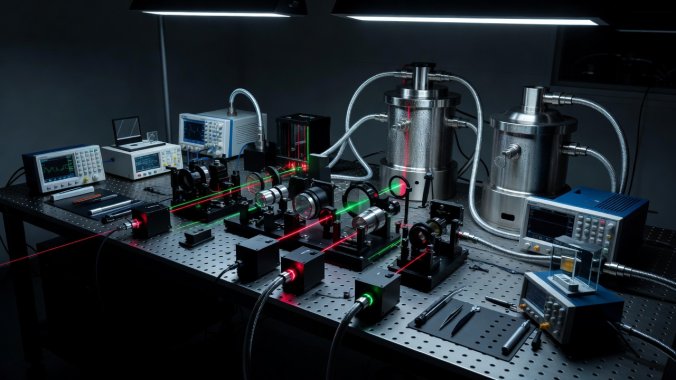
Our Core Epistemological Standards
Science is not a catalogue of unquestionable truths; it is a systematic, error-correcting methodology for querying physical reality. Every article and laboratory procedure hosted on Whiz Team Meter conforms to three strict editorial standards:
- Empirical Reproducibility: We only highlight demonstrations that can be recreated and verified in academic or equipped home laboratories, backed by published peer-reviewed parameters.
- Quantitative Exactness: Instead of vague descriptors like "extremely cold" or "instantaneous impact," we publish specific Kelvin thresholds, shear strain velocities ($s^{-1}$), and acoustic decibel ratings.
- Anti-Sensationalism: We celebrate nature’s inherent strangeness without resorting to hype. We clearly delineate established physics (such as the Meissner effect) from unproven speculative claims (such as acoustic desktop fusion).
Target Audience & Educational Outreach
Our resources are designed for secondary and undergraduate science educators, physics students, laboratory technicians, and inquisitive minds who refuse to accept "it's just magic" as an explanation for counterintuitive phenomena.
By pairing clear schematic illustrations with mathematical formulations—from the Navier-Stokes rheological equations to the Rayleigh-Plesset cavitation model—we empower curious individuals to comprehend the mechanical reality behind the illusion.